


PVC is a versatile thermoplastic offering chemical resistance, rigidity, and fabrication flexibility for industrial equipment and components.

PVC (Polyvinyl Chloride)
Versatile PVC sheet and rod for demanding industrial applications.
Product Overview
Widely used for:
Performance Characteristics:
Moisture Resistant
Chemical Resistant
Stain Resistant
Hydrolysis Resistant
Good Dimensional Stability
Impact Resistant
Strong and Stiff
Easy To Bond
Easy To Fabricate
Easy To Thermoform
Easy To Weld
Easy To Machine
Good Electrical Insulation
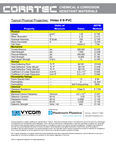
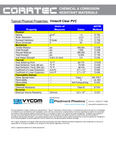
Typical Properties of PVC (Polyvinyl Chloride)
Common Properties
- Common Brand Names Vintec®
- Common Profiles Sheet, Rod
- Friendly Names Rigid PVC, PVC Plastic, PVC-U, Unplasticized PVC
- Typical Lengths 12 - 120 in
- Typical Rod Diameters 0.250 - 14 in
- Typical Rod Lengths 2 - 10 ft
- Typical Thickness 0.062 - 4 in
- Typical Widths 12 - 60 in
Regulation Properties
ASTM/Mil-Spec
RoHS Compliant
UL-94 Flame Class
REACH Compliant
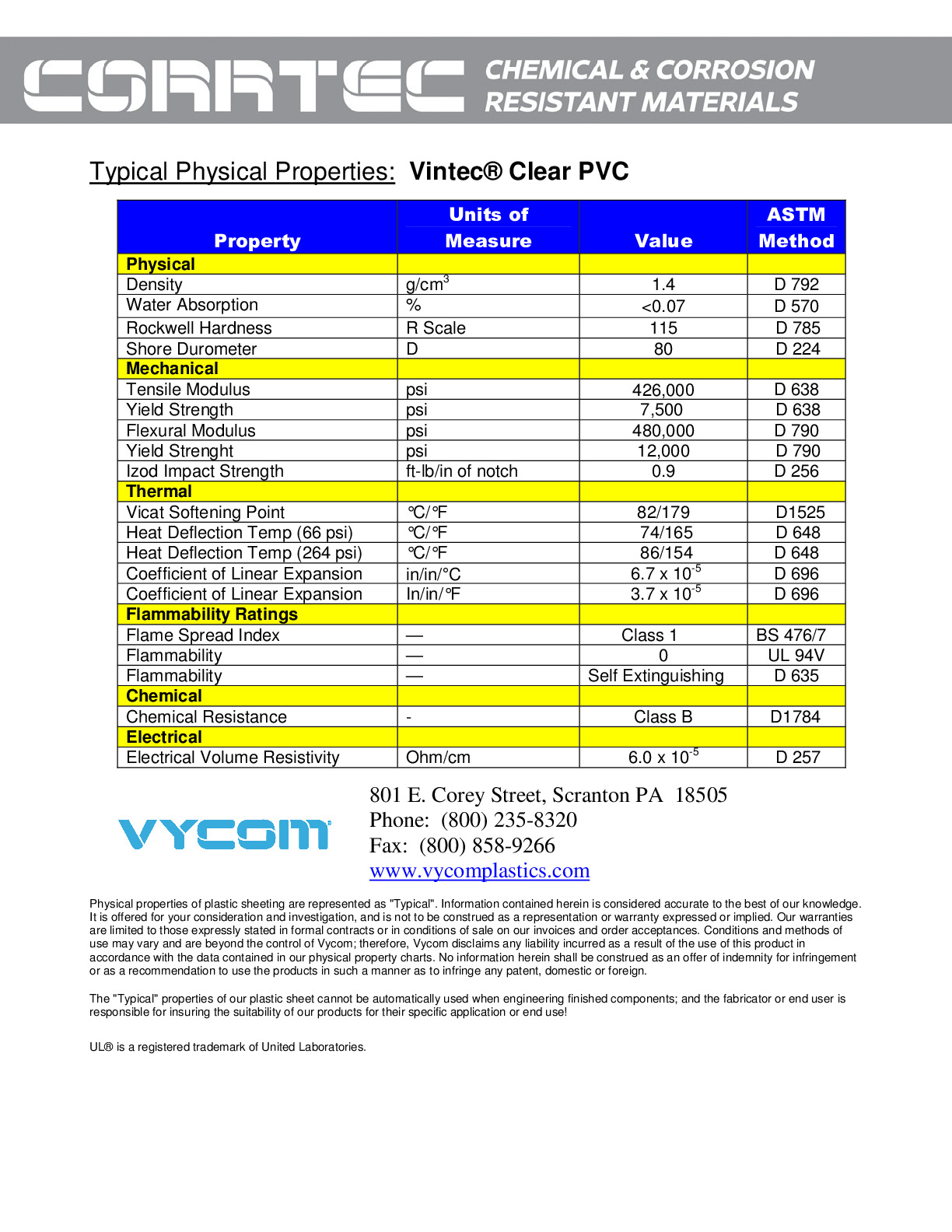
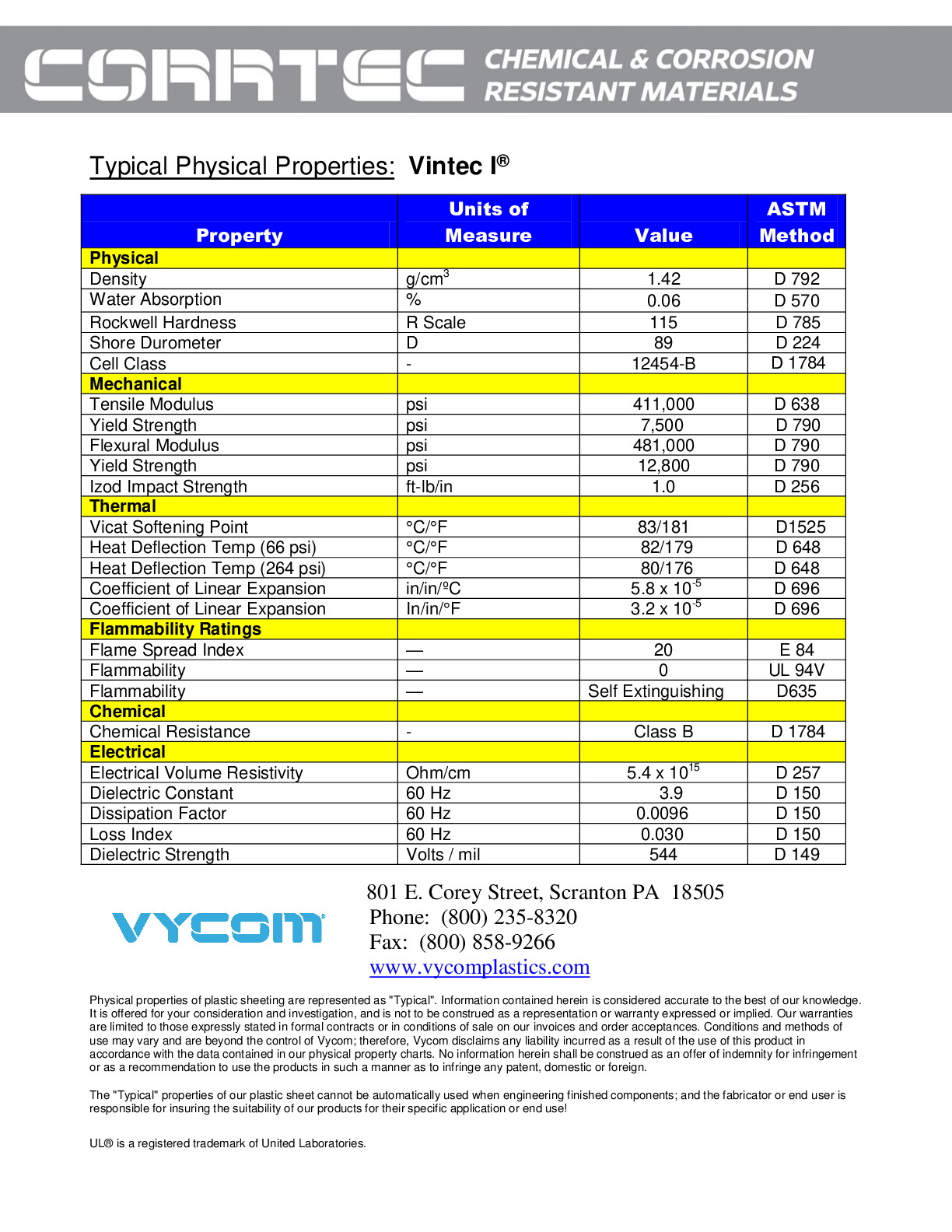
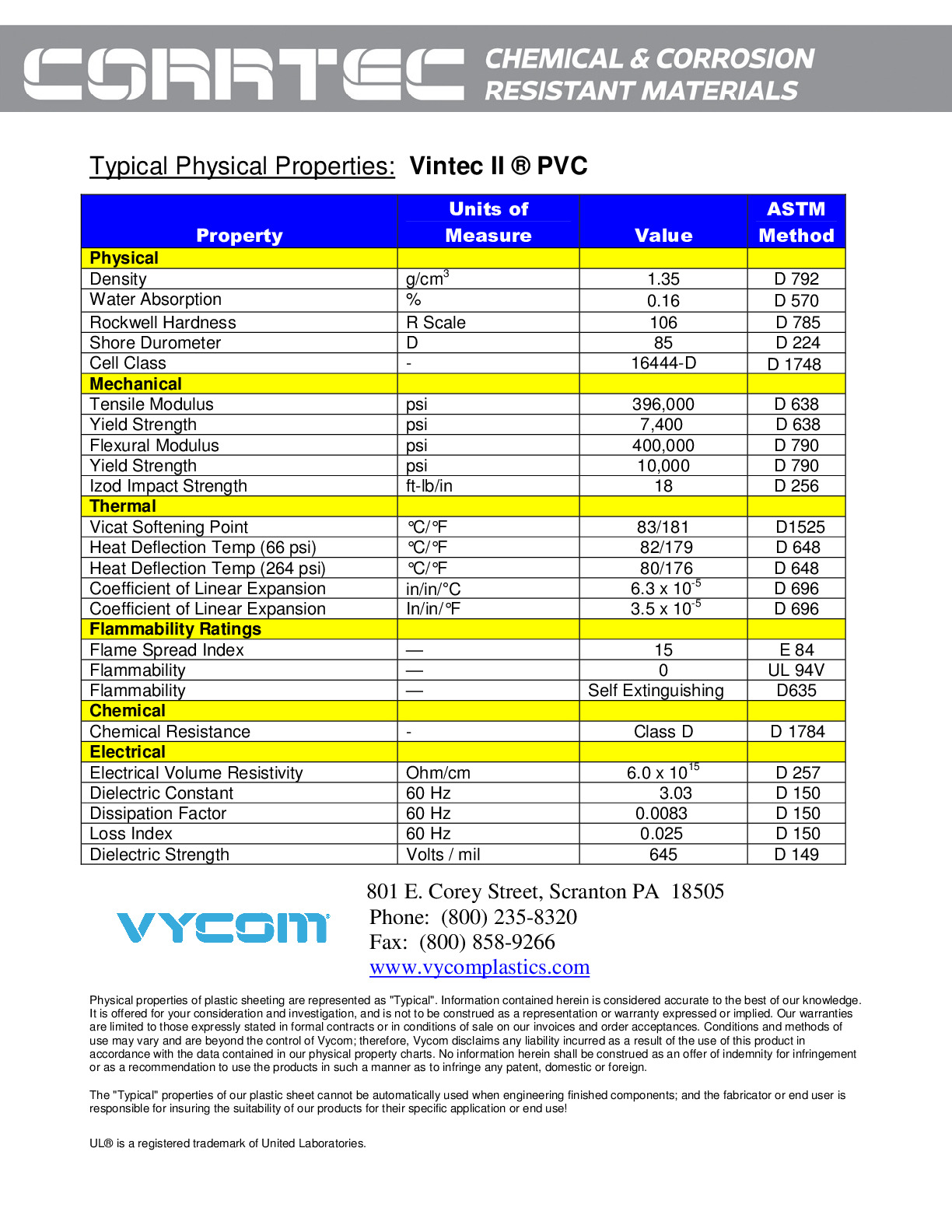
Get a Quote for PVC Plastic at Piedmont Plastics
Polyvinyl chloride (PVC) is a widely used thermoplastic valued for its combination of chemical resistance, corrosion resistance, strength, and fabrication versatility. Also known as rigid PVC or PVC plastic, the material is available in multiple grades designed to meet different performance requirements. Piedmont Plastics supplies PVC Type I and PVC Type II in sheet, rod, and other available rigid profiles for chemical processing equipment, fabricated components, tanks, industrial equipment, and other demanding applications. Contact Piedmont Plastics to discuss your application and find the right PVC material for your requirements.
Available PVC Product Options
Piedmont Plastics offers multiple rigid PVC product options to meet a wide range of mechanical, chemical, and fabrication requirements. PVC Type I and PVC Type II provide many of the core advantages associated with rigid PVC, but each is designed to address different performance needs.


An Expert is just around the corner.
With over 100 years of combined product knowledge and industry experience, we are confident our plastics experts can help you find a solution for your application.
Key Features of PVC
Rigid PVC provides a useful balance of physical, chemical, and fabrication properties for industrial applications. Specific performance characteristics vary between PVC Type I, PVC Type II, and individual grades, so material selection should be based on the requirements of the finished application.
Chemical resistance: Many PVC grades resist a broad range of acids, alkalis, salts, and other chemicals.
Moisture resistance: PVC has low water absorption, supporting its use in wet and humid environments.
Corrosion resistance: PVC does not rust and can provide an alternative to certain metals in compatible corrosive environments.
Strength and rigidity: Rigid PVC provides structural stiffness for fabricated components, equipment, and other industrial applications.
Impact-resistant options: PVC Type II is formulated to provide greater toughness and impact resistance than general-purpose Type I PVC.
Electrical insulation: PVC generally provides good electrical insulating characteristics for appropriate electrical and industrial applications.
Benefits and Advantages


Common Applications
Rigid PVC is used throughout chemical processing, manufacturing, electrical, and general industrial environments. The appropriate grade depends on factors such as chemical exposure, mechanical loads, impact requirements, temperature, and fabrication needs.
Chemical processing equipment: PVC can be fabricated into components for equipment exposed to compatible chemicals and corrosive environments.
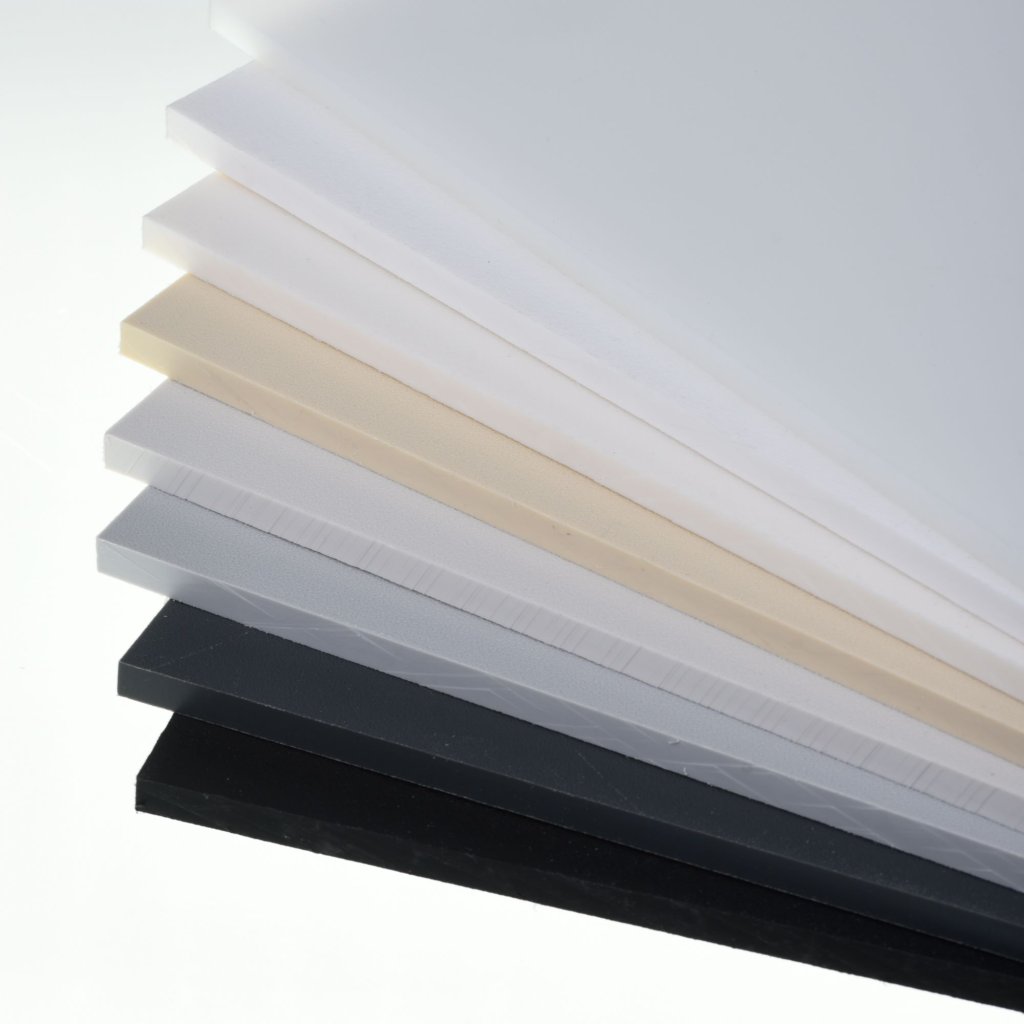
Tanks and vessels: PVC sheet can be fabricated into tanks, liners, containment systems, and related processing equipment.
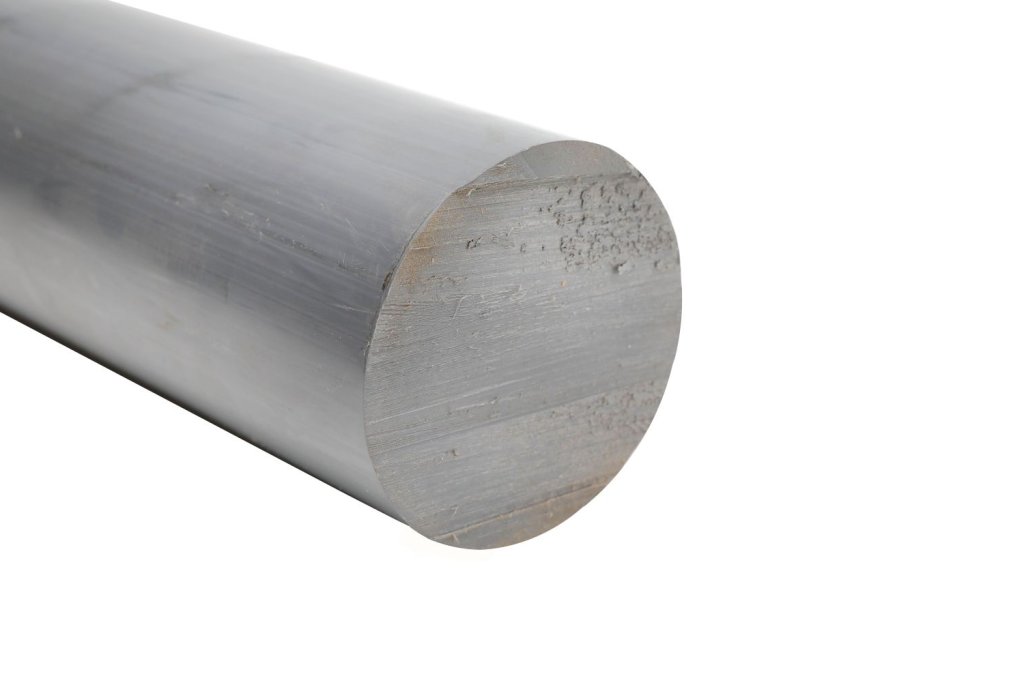
Machine components: PVC sheet and rod can be machined into spacers, supports, guards, covers, and other components.
Laboratory equipment: Chemical resistance and fabrication versatility make certain PVC grades useful for laboratory and processing equipment.
Electrical components: PVC's electrical insulating properties support select electrical equipment and component applications.
Corrosion-resistant components: PVC can be considered for parts exposed to moisture or compatible chemicals that may corrode certain metals.
Ductwork and ventilation components: PVC sheet can be fabricated for compatible corrosive-air handling and ventilation applications.
Related Products
-
CPVC
CPVC is a durable, high-performance thermoplastic designed to resist corrosion and handle higher temperatures than standard PVC. It’s widely used in chemical processing, water treatment, and industrial piping systems where strength and reliability are essential.
-
Polypropylene
Polypropylene is a tough, lightweight plastic known for its chemical resistance, low moisture absorption, and versatility in industrial, medical, and food-grade applications.
-
HDPE (High Density Polyethylene)
HDPE offers strength, low weight, and resistance to chemicals and moisture, making it ideal for food and beverage equipment, industrial components, and marine applications.
-
PVDF (Polyvinylidene Fluoride)
PVDF plastic offers exceptional purity, chemical resistance, and mechanical strength. Available in sheet and rod form for chemical processing, electrical, and industrial applications.


Frequently Asked Questions
Below are some commonly asked questions about PVC and how it performs in various environments.
Type 1 PVC is optimized for chemical resistance, while Type 2 offers greater impact strength at the expense of chemical resistance.
Yes. Piedmont Plastics offers cut-to-size services for rigid PVC sheet and rod, helping customers receive material in dimensions that meet their project and fabrication requirements.
As a trusted PVC Type 1 distributor, Piedmont Plastics offers convenient local access through over 50 branches across North America.
You can purchase PVC Type 2 sheet and rod through Piedmont Plastics, which has a nationwide network of branches across North America. With local inventory and custom cutting services, Piedmont makes it easy to source the material you need close to your location. Contact your nearest branch to request a quote or arrange pickup and delivery.
Chlorinated Polyvinyl Chloride (CPVC) is a thermoplastic made by chlorinating PVC resin. This gives it higher temperature tolerance and better chemical resistance, making it suitable for more demanding applications than standard PVC.
Related Articles

A Guide To PVC Plastic
One of the most widely used and recognized thermoplastic polymers globally is ...

Material Comparison: PVC Vs. HDPE
HDPE and PVC pipe have several similarities, but there are important differences ...

Comparing PVC and Polycarbonate
PVC is cost-effective and versatile, while polycarbonate offers superior impact ...
Common Applications

Automotive Covers, Shrouds, and Housings
Piedmont Plastics carries ABS and other lightweight but durable plastics for ...
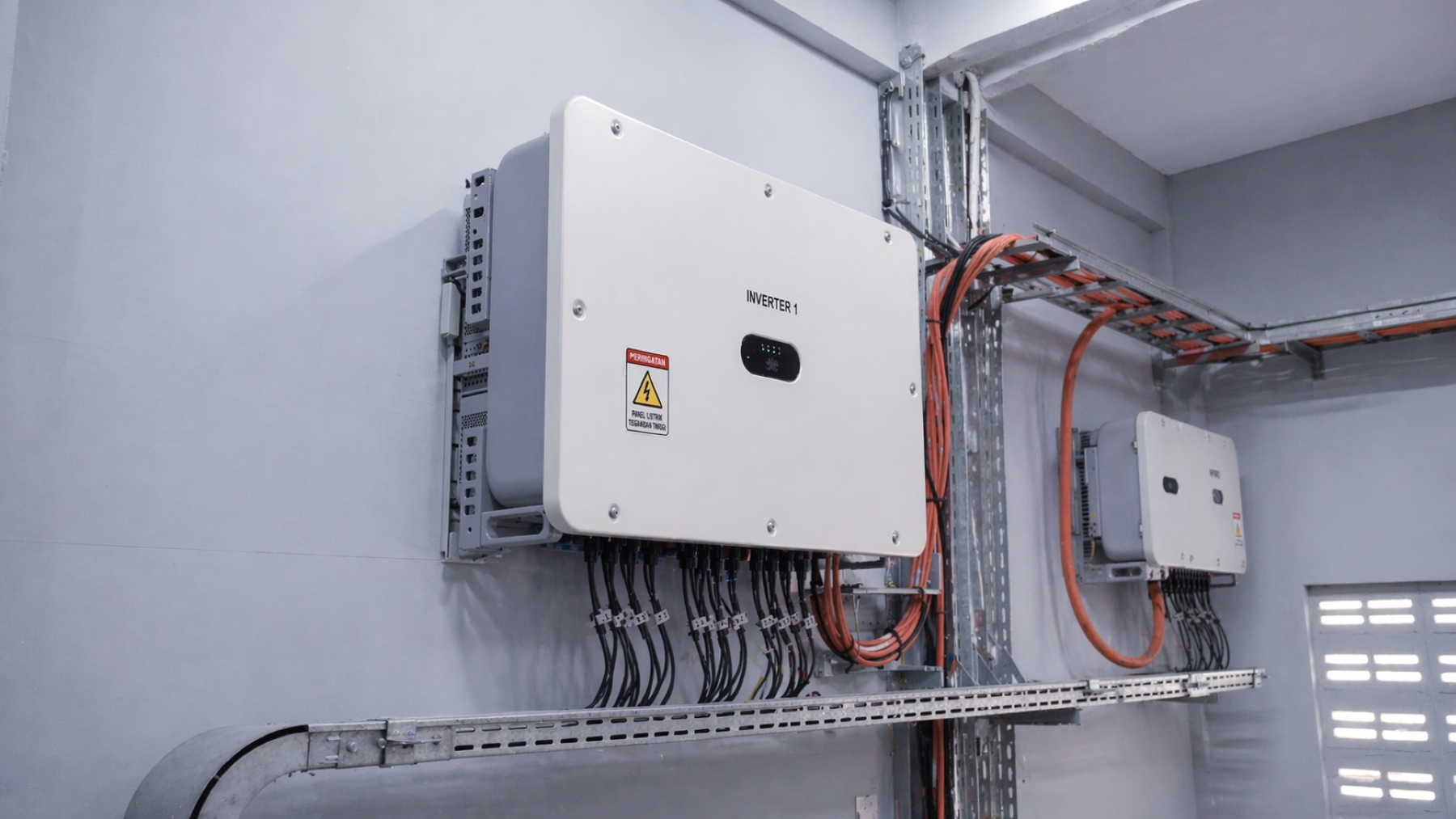
Electrical Enclosures
Piedmont Plastics offers performance plastic materials like ABS and ...

Machine Guards
Piedmont Plastics carries polycarbonate, PETG, acrylic, and clear PVC for ...

Manifolds
Heat resistant up to 185 degrees, Acetal makes the perfect plastic material for ...

Tanks and Storage
Add temporary protection to floors and walls with lightweight polypropylene ...

Valves, Seals, and Fittings
From plumbing to food manufacturing, most industries require durable, ...

Wet Benches
Plastic wet benches meet the safety and manufacturing standards for ...

Workbenches | Industrial Tables
Durable polycarbonate sheet and other plastic products from Piedmont Plastics ...
Common Industries

Automotive
Piedmont Plastics provides plastics and composites for limousines, cabs, ...

Building and Construction
Piedmont Plastics provides high-quality plastic materials for building, ...

Electrical
Piedmont Plastics is a distributor of plastics for electrical components ...

Machine Shops
Piedmont supplies machine shops with a wide range of plastics, including acetal, ...

Oil and Gas
Piedmont Plastics supplies a range of engineering thermoplastics for ...

Plastic and Metal Fabrication
Piedmont works with plastic and metal fabrication partners in thermoforming, ...
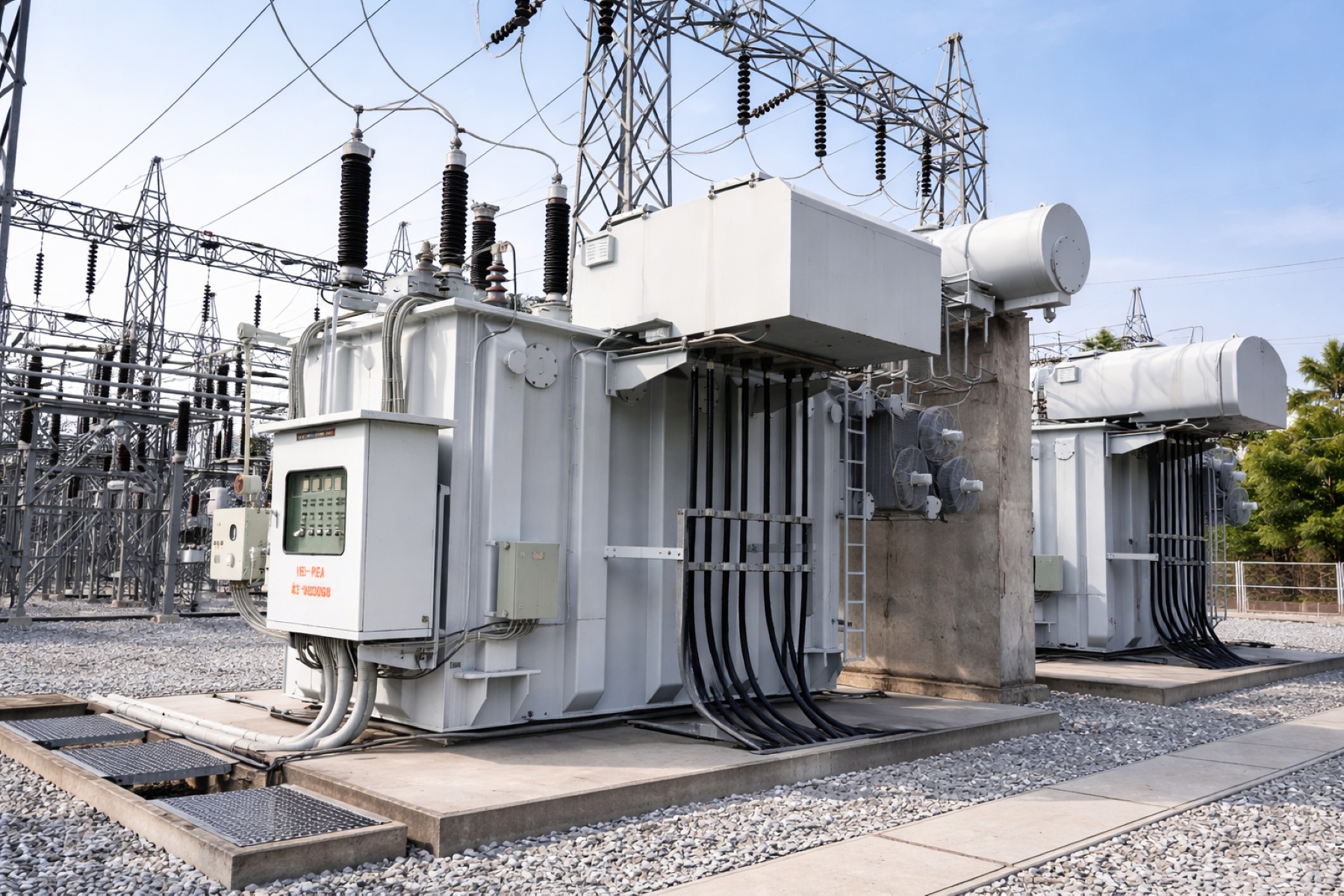
Power Generation and Distribution
High-performance plastics and engineered materials are used to make parts and ...

Semiconductor
Piedmont Plastics supplies high-performance plastics for the semiconductor ...