


Polyethylene terephthalate sheet and rod offer high strength, stiffness, and dimensional stability. Ideal for precision parts, food equipment, and wear applications.

PET (Polyethylene Terephthalate)
A versatile engineering thermoplastic polymer with excellent wear resistance.
Product Overview
Widely used for:
Performance Characteristics:
Autoclavable
Easy To Bond
Easy To Fabricate
Easy To Machine
Easy To Weld
Chemical Resistant
Good Dimensional Stability
Good Electrical Insulation
Low Friction
High Temperature
Low Temperature
Hydrolysis Resistant
Stain Resistant
Strong and Stiff
Soft and Pliable
Wear Resistant
Abrasion Resistant
Moisture Resistant
Typical Properties of PET (Polyethylene Terephthalate)
Common Properties
- Common Profiles Sheet, Rod
- Typical Thickness Size (in) 0.08-4 in
- Typical Rod Diameter 0.375-7 in
- Typical Lengths (in) 12-120 in
- Typical Widths (in) 12-40 in
- Typical Rod Length 12-120 in
- Friendly Names PET, PET-P
- Common Brand Names Ertalyte®, Semitron PET-P, Sustadur PET
Electrical Properties
- Dielectric Constant 3.3
- Dissipation Factor 0.007
- Surface Resistivity 1×10¹⁴ ohms/square
- Arc Resistance 130 s
- Dielectric Strength 400 V/mil
- Volume Resistivity 1×10¹⁵ ohm-cm
- Breakdown Voltage 17 kV/mm
Mechanical Properties
- Bearing Yield Strength 15000 psi
- Shear Strength 48 MPa
- Izod Impact, Notched 0.5 ft-lb/in
- Falling Dart Impact 10 ft-lb
- Compressive Yield Strength 13000 psi
- Hardness, Rockwell R 115
- Tensile Strength, Yield 62 MPa
- Tensile Strength, Ultimate 70 MPa
- Flexural Modulus 500000 psi
- Elongation at Break 20 %
- Modulus of Elasticity 400,000 psi
- Instrumented Impact Total Energy 10 ft-lb
- Elongation at Yield 6 %
- Izod Impact, Unnotched 3 ft-lb/in
- Gardner Impact 5 ft-lb
- Flexural Yield Strength 15000 psi
Physical Properties
- Density 1.39 g/cm³
- Melt Flow 9 g/10 min @ 250°C
- Water Absorption 0.07 %
- Moisture Absorption at Equilibrium 0.3 %
- Linear Mold Shrinkage 0.4 %
Regulation Properties
REACH Compliant
FDA
RoHS Compliant
Thermal Properties
- Minimum Operating Temperature –40 °F
- CTE, Linear (Flow Direction) 3.9 × 10⁻⁵ in/in-°F
- Deflection Temperature at 0.46 MPa (66 psi) 160 °F
- Flammability (UL 94) HB
- Thermal Conductivity 0.15 W/m-K
- Vicat Softening Point 190 °F
- Deflection Temperature at 1.8 MPa (264 psi) 120 °F
- Max Continuous Operating Temperature 200 °F
- CTE, Linear (Transverse to Flow) 5.0 × 10⁻⁵ in/in-°F
Literature and Data Sheets
-
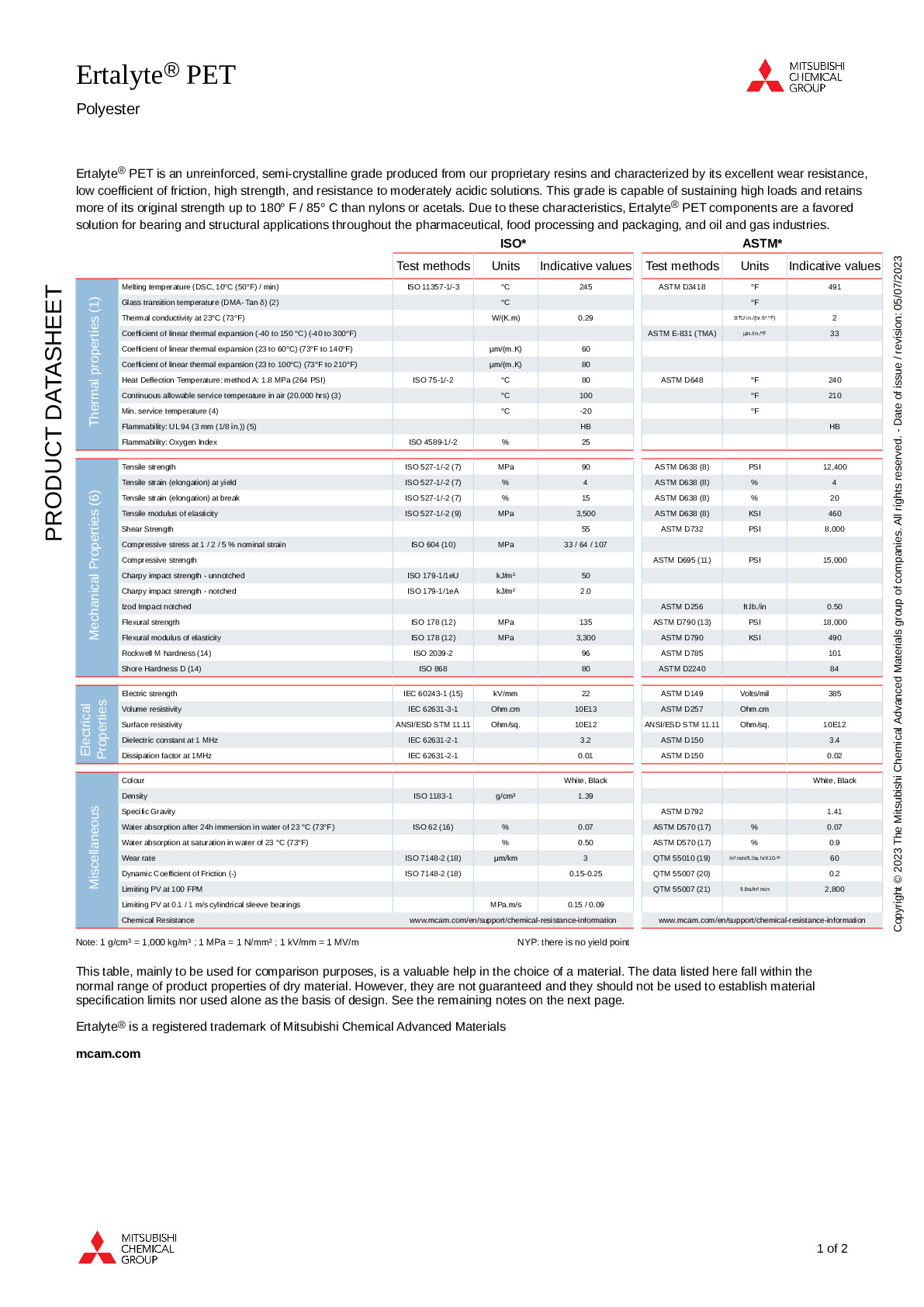 Ertalyte PET Mitsubishi Chemical Group
 -
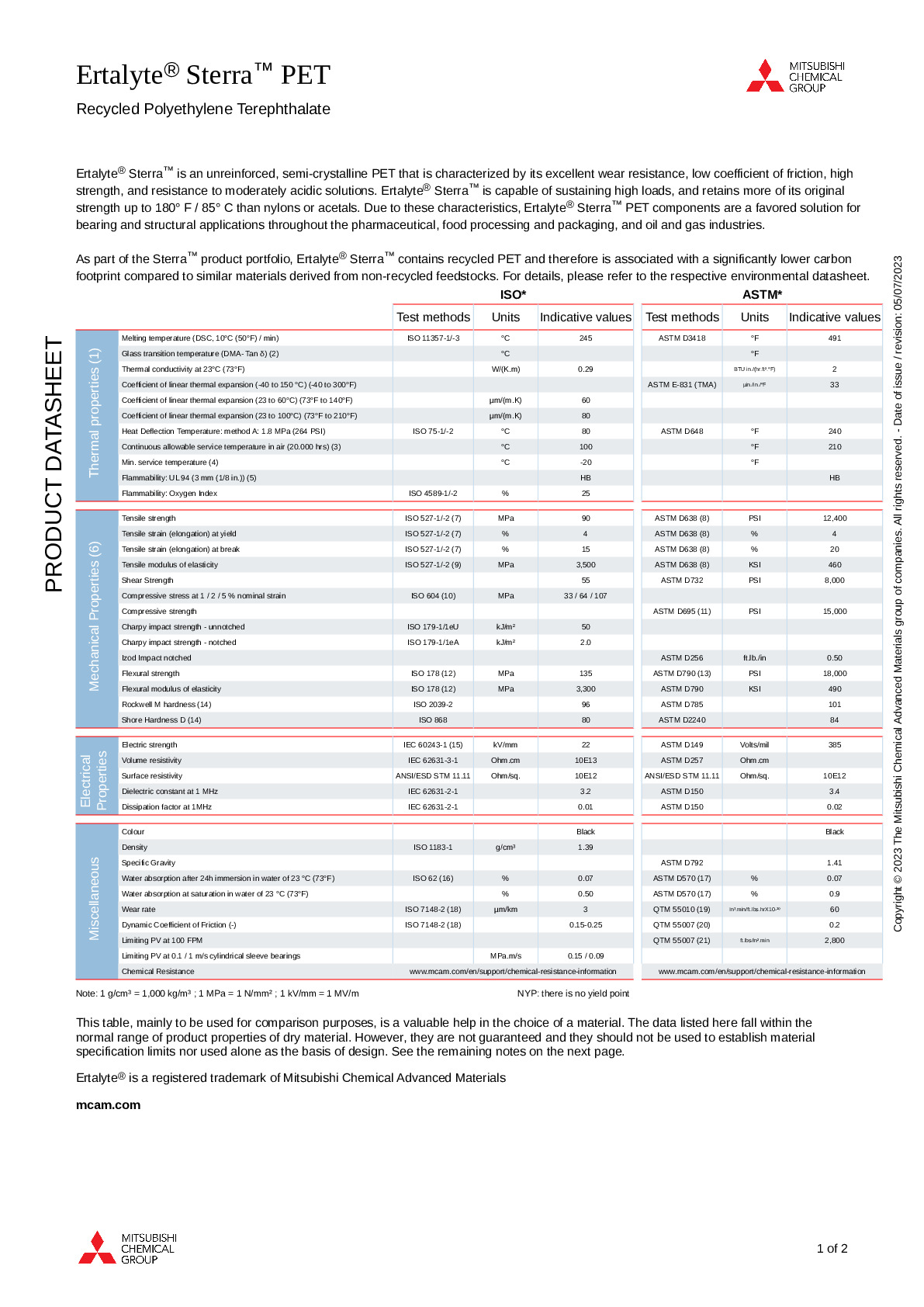 Ertalyte Sterra PET Mitsubishi Chemical Group
 -
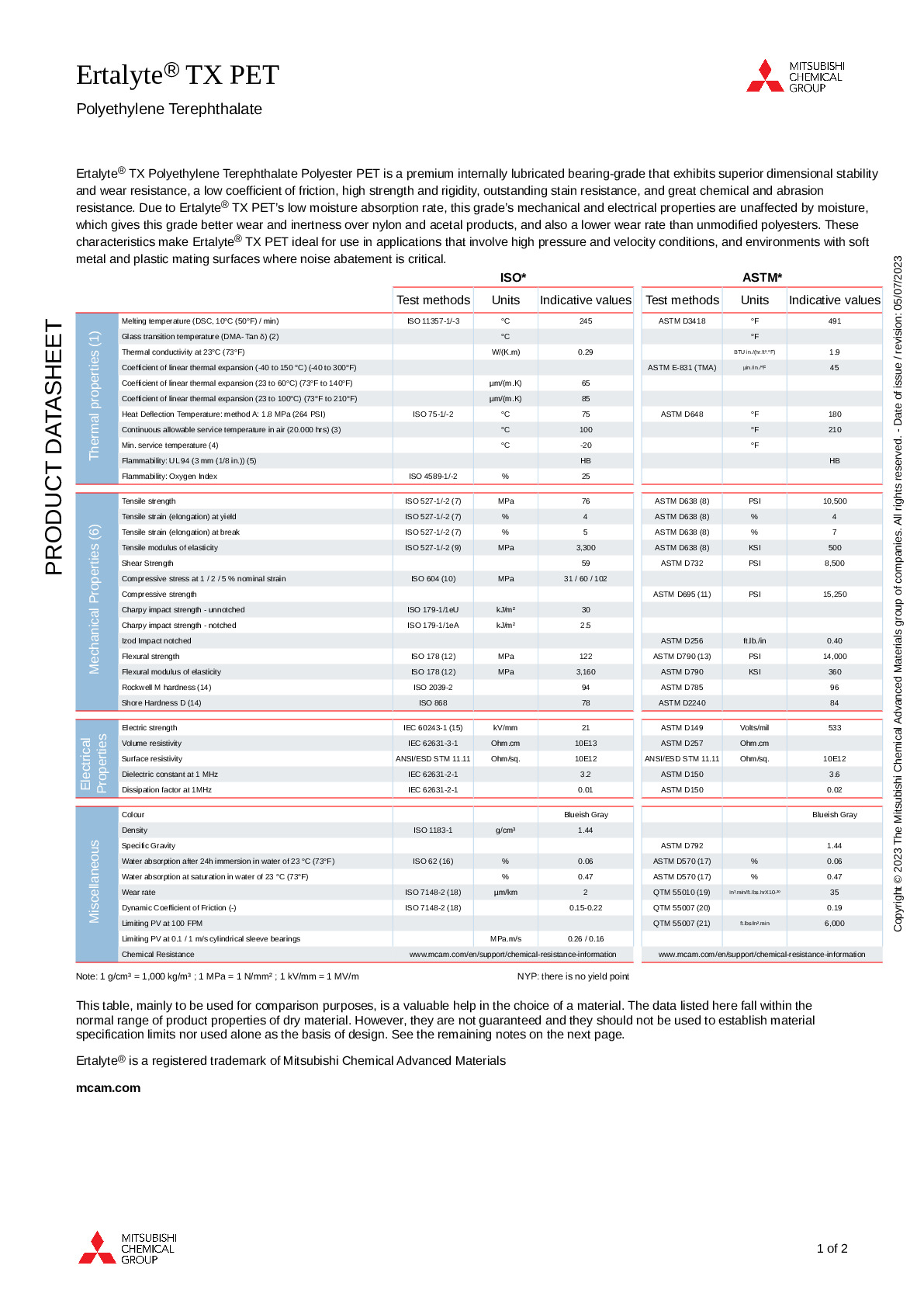 Ertalyte TX PET Mitsubishi Chemical Group
 -
 High-Performance Plastic Solutions Brochure Piedmont Plastics
 -
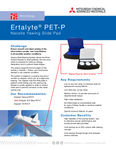 MCAM Ertalyte® PET-P Nacelle Yawing Slide Pad Mitsubishi Chemical Group
 -
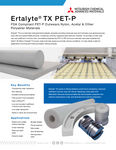 MCAM Ertalyte® TX PET-P Mitsubishi Chemical Group
 -
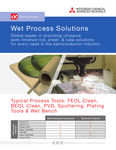 MCAM Wet Process Solutions Mitsubishi Chemical Group
 -
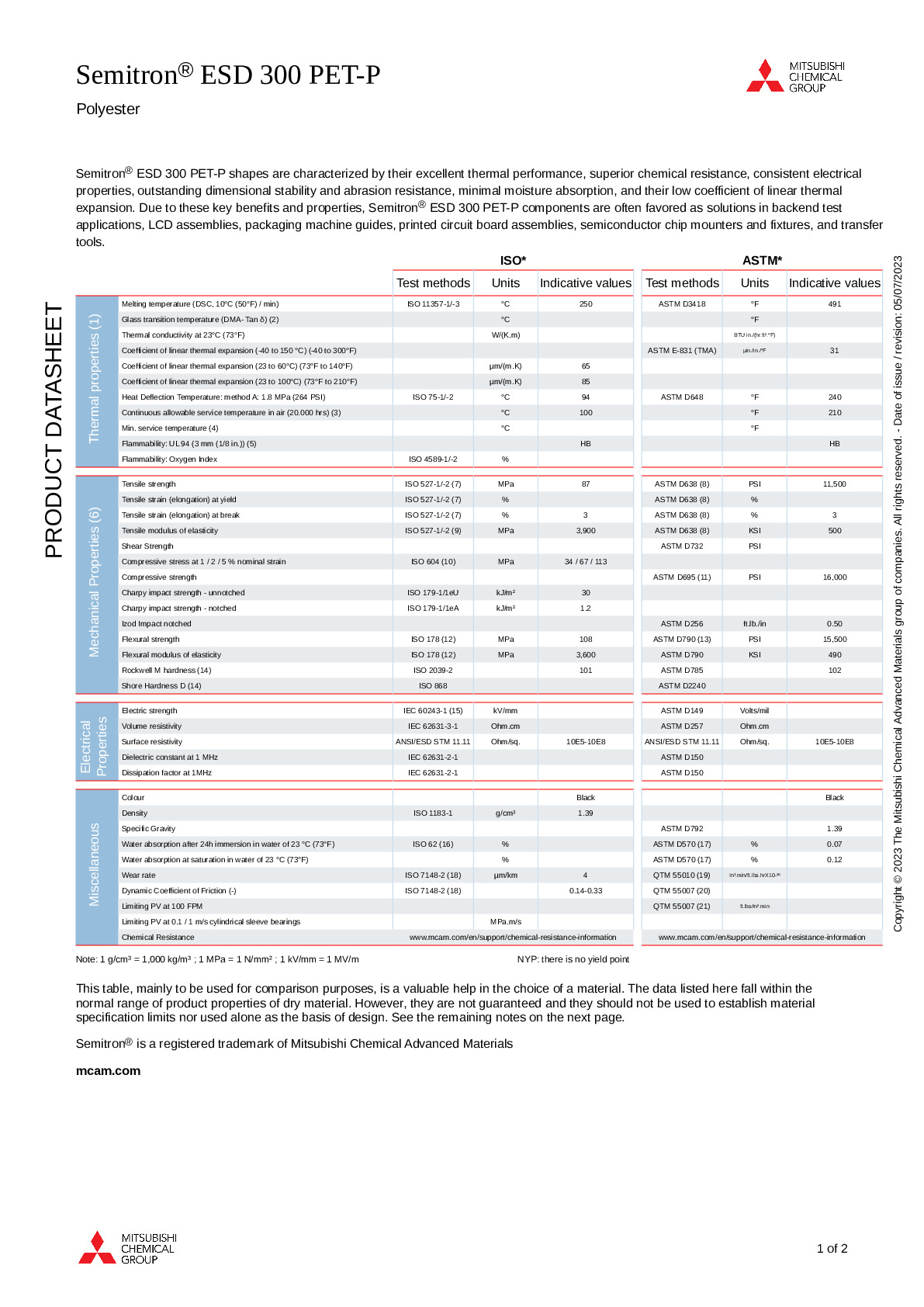 Semitron ESD 300 PET-P Mitsubishi Chemical Group
 -
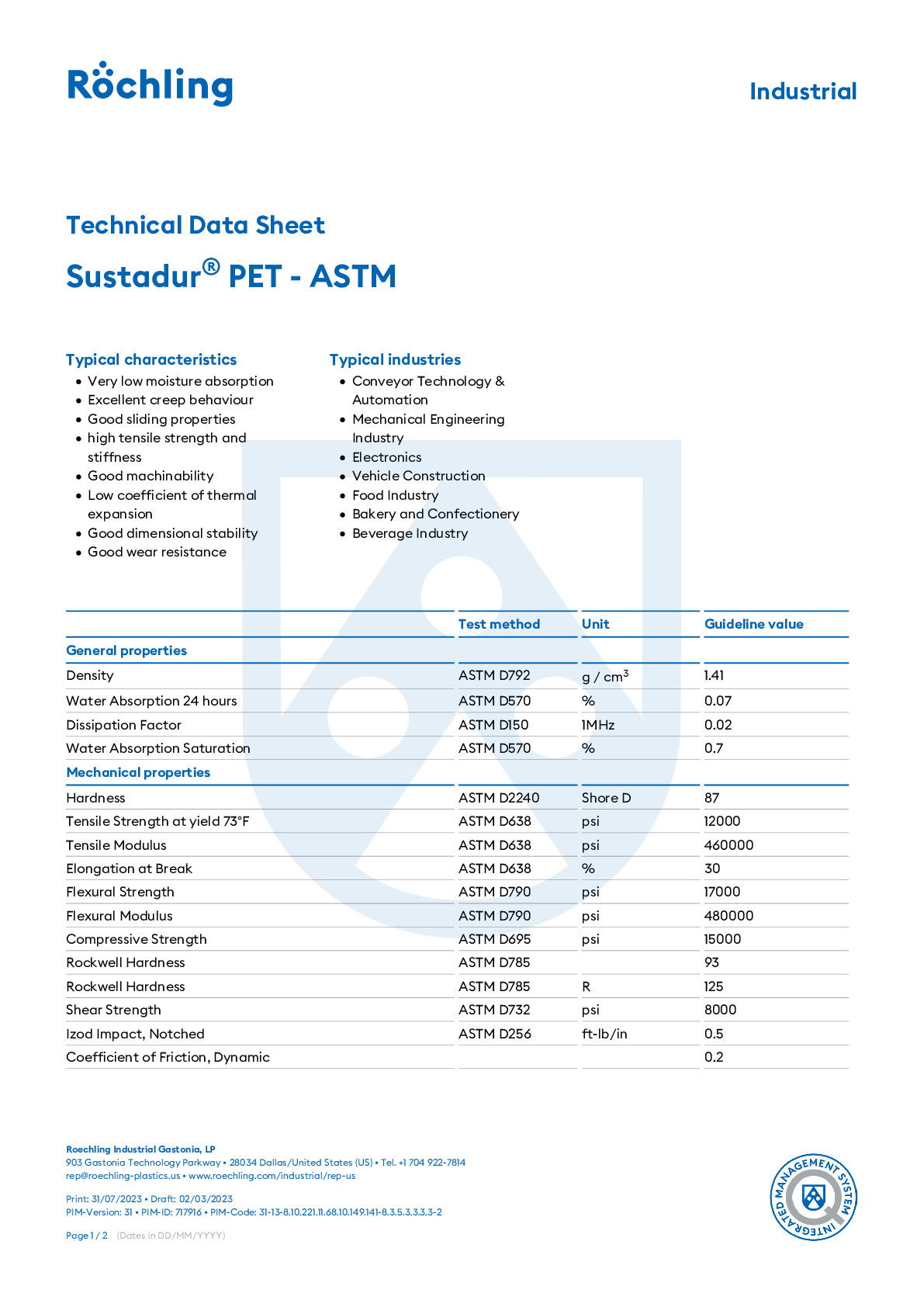 Sustadur PET - ASTM Röchling Engineering Plastics
Get a Quote for PET at Piedmont Plastics
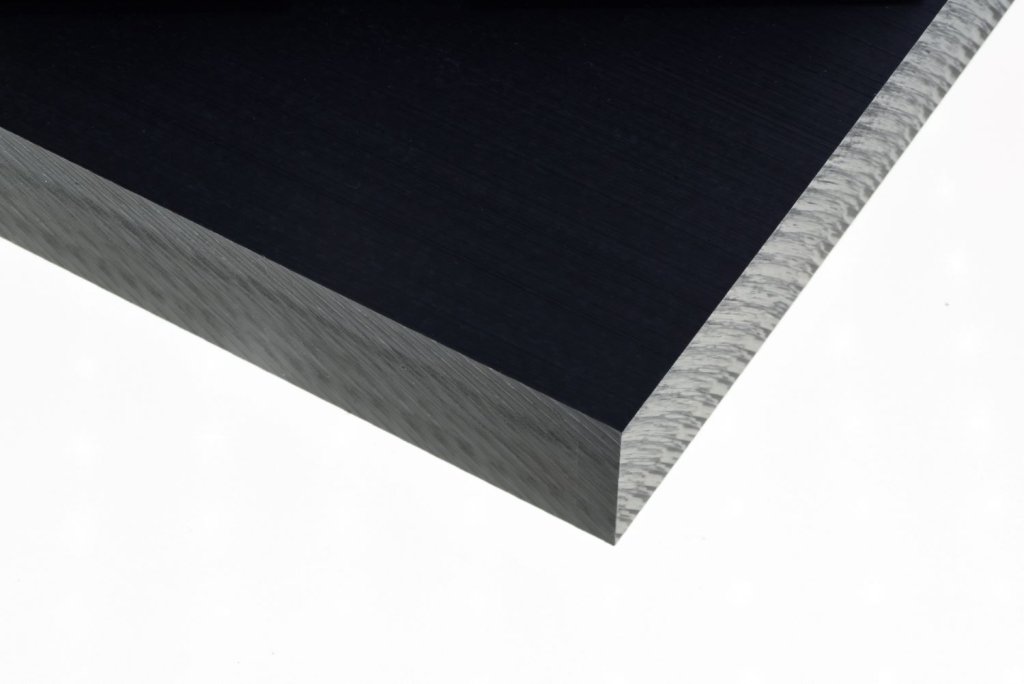
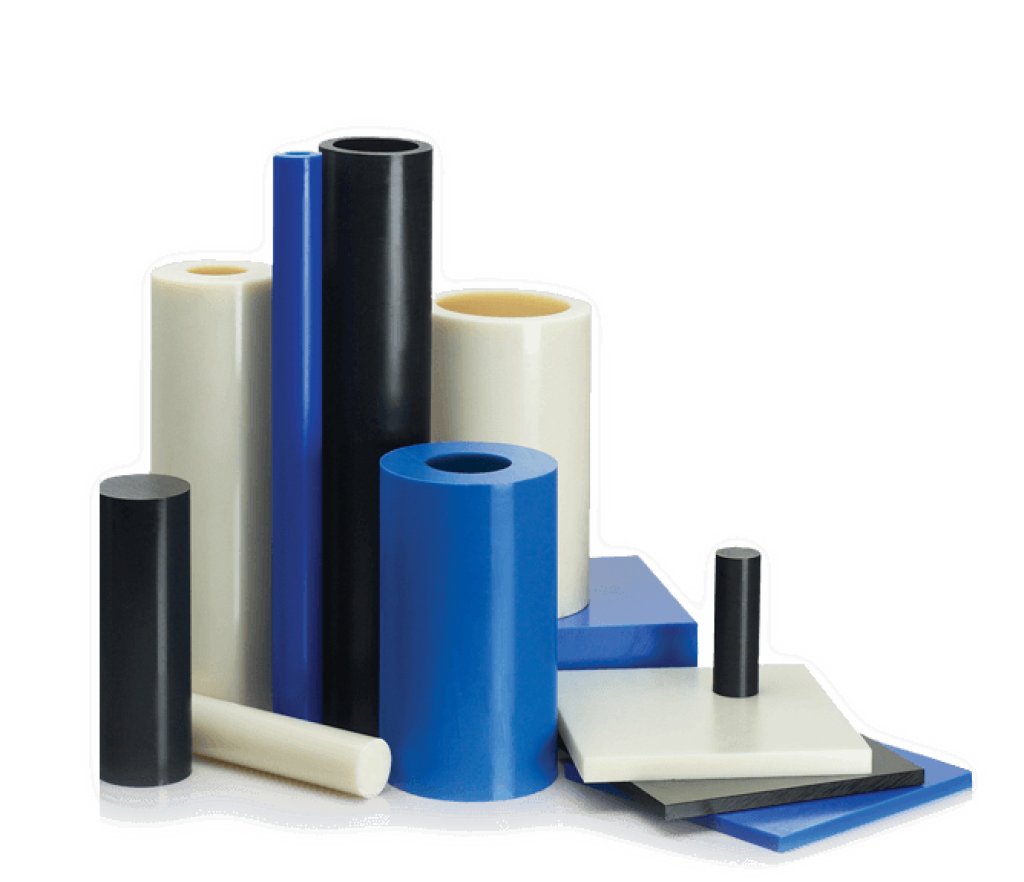
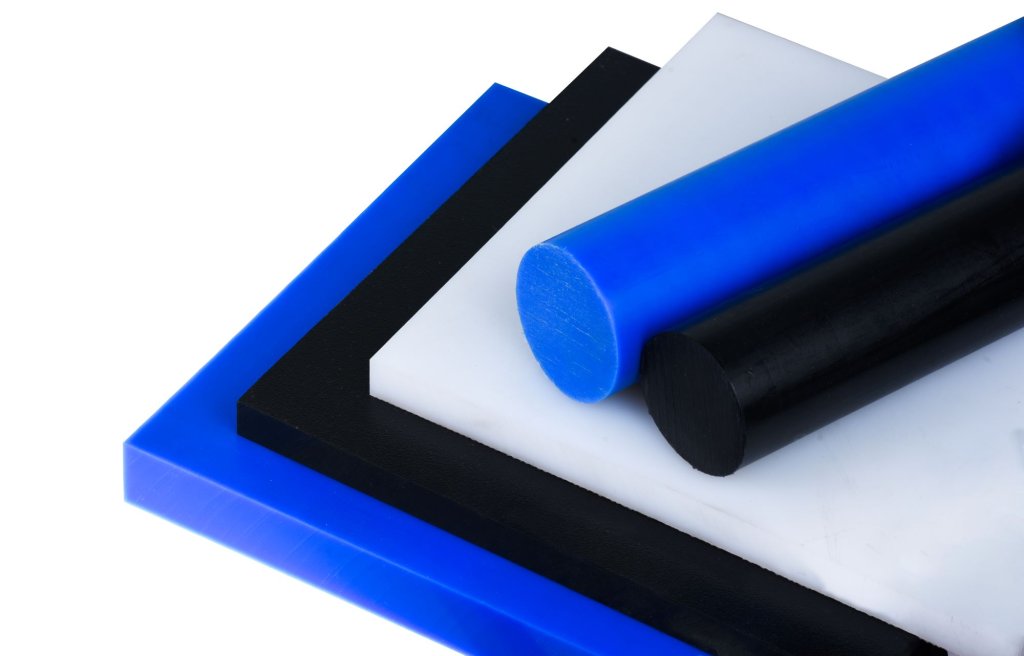
Polyethylene terephthalate, also known as PET plastic is an engineering thermoplastic known for its excellent dimensional stability, strength, and low moisture absorption. Available in both sheet and rod form, PET delivers exceptional wear resistance and machinability, making it an ideal choice for precision parts in demanding industrial environments.
With its naturally low coefficient of friction and resistance to chemicals and abrasion, PET performs exceptionally well in applications that require tight tolerances and long-term durability. Piedmont Plastics offers PET materials that are easily machined, FDA-compliant for food contact, and well suited for both dry and lubricated environments.
Contact your local Piedmont Plastics branch to request a quote or learn more about how PET can improve the performance and service life of your components.
Key Features of Polyethylene Terephthalate
PET provides a strong combination of mechanical and thermal properties for precision engineering and wear applications. Its excellent dimensional stability and low moisture absorption make it a preferred alternative to materials like acetal or nylon in high-precision parts.
Key performance characteristics include:
High mechanical strength and rigidity
Excellent dimensional stability under load
Low moisture absorption for consistent performance
Good wear resistance and low friction coefficient
FDA-compliant for food contact applications
Easy to machine with tight tolerances
Resistance to oils, greases, and common solvents
Performs well in dry or lubricated operating conditions
Benefits and Advantages


Common Applications
PET sheet and rod are commonly used in industrial, mechanical, and food-processing or packaging environments where stability and wear resistance are critical.
Typical applications include:
Gears and Bearings: Smooth, low-friction operation under heavy load
Precision Mechanical Components: Tight-tolerance parts with minimal expansion
Food Processing Equipment: FDA-approved surfaces for safe contact
Conveyor Components: Reliable, wear-resistant guides and supports
Electrical Insulation Parts: Good dielectric properties with low moisture uptake
Pump and Valve Parts: Chemical resistance for long-term durability
Related Products
-
Acetal
Acetal (POM) is an engineering plastic known for its durability, dimensional stability, and wear and abrasion resistance, making it a popular choice for precision parts in automotive, electronics, and food processing applications.
-
Cast Nylon
Cast nylon is a strong, wear-resistant engineering plastic available in sheet, rod, and tube. Its low friction and machinability make it ideal for gears, bearings, bushings, and industrial components.
-
HDPE (High Density Polyethylene)
HDPE offers strength, low weight, and resistance to chemicals and moisture, making it ideal for food and beverage equipment, industrial components, and marine applications.
-
PBT (Polybutylene Terephthalate)
PBT plastic sheet and rod offer strength, stiffness, and electrical insulation for demanding industrial, electrical, and automotive applications.
-
UHMW PE
UHMW from Piedmont Plastics offers superior durability, low friction, and wear resistance, ideal for conveyors, liners, and food-grade industrial parts.
-
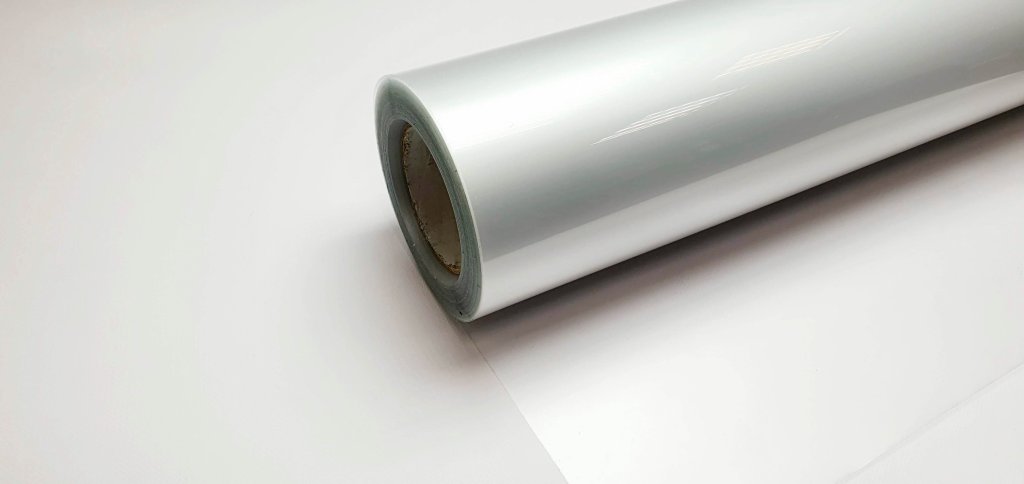
Polyester Film
Polyester (PET) film offers strength, clarity, and dimensional stability for applications in packaging, protection, graphics, and electrical insulation.

Frequently Asked Questions
Below are some of the most commonly asked questions about polyethylene terephthalate sheet and rod, including how the material performs in different environments and how it compares to other engineering plastics. These answers can help you determine whether PET is the right choice for your application.
Many PET grades are formulated to meet food contact standards, making them well suited for use in food processing and handling equipment. However, users should always verify with the manufacturer or supplier that the specific material grade purchased complies with the applicable regulations and requirements for their intended application.
PET offers lower moisture absorption and better dimensional stability than nylon, with higher stiffness and wear performance similar to or better than acetal.
PET typically operates continuously up to approximately 210°F (100°C) and maintains its mechanical properties well under load. However, actual performance can vary by grade and application, so it’s important to confirm the recommended operating temperature with the manufacturer or material supplier.
Why Buy from Piedmont Plastics?
At Piedmont Plastics, we combine technical expertise with local inventory to deliver reliable material solutions tailored to your needs.
Nationwide network of branches: Providing fast local delivery and expert support.
Custom cutting and fabrication services: Ready to machine PET sheet and rod to your specifications.
Deep industry expertise: Trusted by engineers and fabricators across diverse industries.
Wide product selection: Your one-stop shop for performance plastics and complementary materials.
Common Applications

Bearings and Bushings
Piedmont Plastics stocks a full line of nylon, acetal, and PEEK products for ...

Bottling Lines
Piedmont Plastics carries a large inventory of FDA compliant plastic products ...

Chute, Hopper, Silo and Truck Bed Liners
Piedmont Plastics carries Quadrant Plastics TIVAR and other plastic materials ...

Thrust Washers
Thrust washers made from materials such as nylon and UHMW polyethylene allow ...

Valves, Seals, and Fittings
From plumbing to food manufacturing, most industries require durable, ...
Common Industries

Automotive
Piedmont Plastics provides plastics and composites for limousines, cabs, ...

Building and Construction
Piedmont Plastics provides high-quality plastic materials for building, ...

Electrical
Piedmont Plastics is a distributor of plastics for electrical components ...

Food Processing and Handling
Piedmont Plastics offers a full inventory of NSF, FDA, USDA, and 3A-Dairy ...

Machine Shops
Piedmont supplies machine shops with a wide range of plastics, including acetal, ...

Material Handling and Conveying
Performance plastics help improve efficiency, reduce wear, and extend equipment ...

Medical Equipment
Piedmont Plastics offers an extensive line of plastics for medical equipment ...