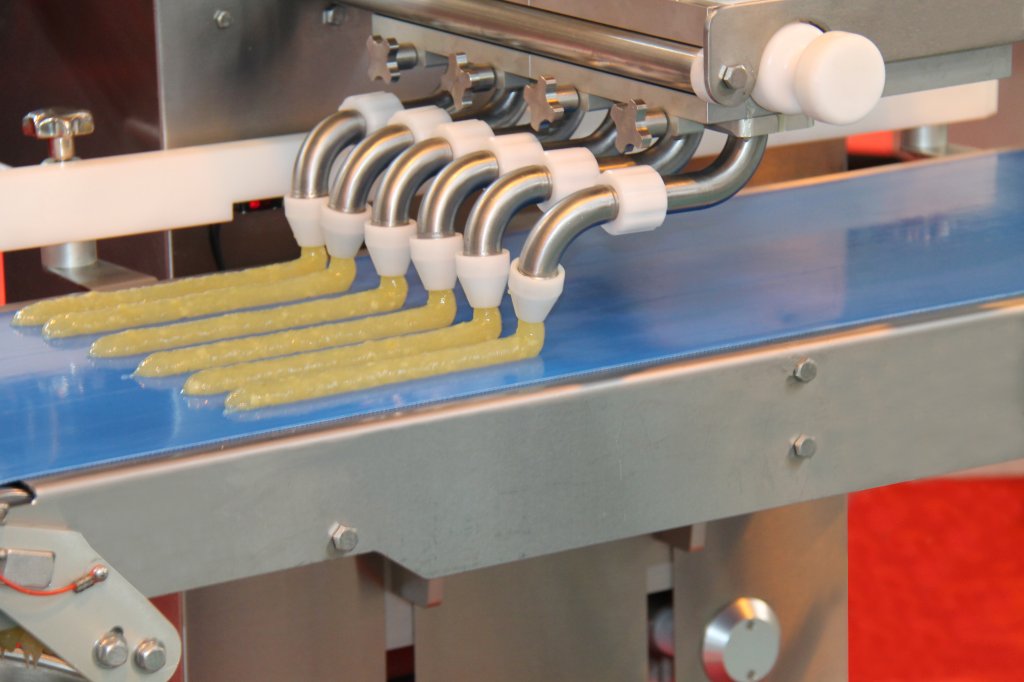
The food processing and handling industry primarily depends on technology and equipment designed to meet demanding production schedules and environments. Facilities that process and package food and drinks rely on high-performance plastics for durability, strength, and lower running costs. Due to the versatility of performance plastics, they can be used in various applications, from mixing and cooking to packing and transportation.
One of the most significant benefits of industrial plastics in the food processing and handling industry is that they are NSF, FDA, USDA, and 3-A Dairy compliant. This makes it possible to engage directly with food without worrying about tainting freshly made products with chemicals, dangerous shavings, or other contaminants. Food-grade plastic is also x-ray detectable, which means foreign materials can be detected before being exposed to the customer.
Read the article below to learn more about the best materials to use in food processing and handling!


An Expert is just around the corner.
With over 100 years of combined product knowledge and industry experience, we are confident our plastics experts can help you find a solution for your application.
What Is Food-Grade Plastic?
A material is said to be “FDA-compliant” if it meets all of the FDA’s requirements for secure direct contact with food, officially becoming a “food-grade” plastic. This material must be durable enough to withstand the environment it will be subjected to in order to be FDA compliant. For instance, a plastic conveyor belt that transfers food through a scorching oven to cook must not change physically when exposed to high temperatures. Similarly, plastics used in frigid environments must also be able to withstand those conditions without issue.
Food-grade plastic must also endure repeated rounds of vigorous cleaning and sanitizing without losing strength or effectiveness. Last but not least, it must be compatible with the kind of food it will come into touch with and not leak any chemicals. If the plastic comes into contact with an acidic food item such as lemon juice or tomato sauce or has a high moisture content, it cannot be found to draw any chemicals into the food.
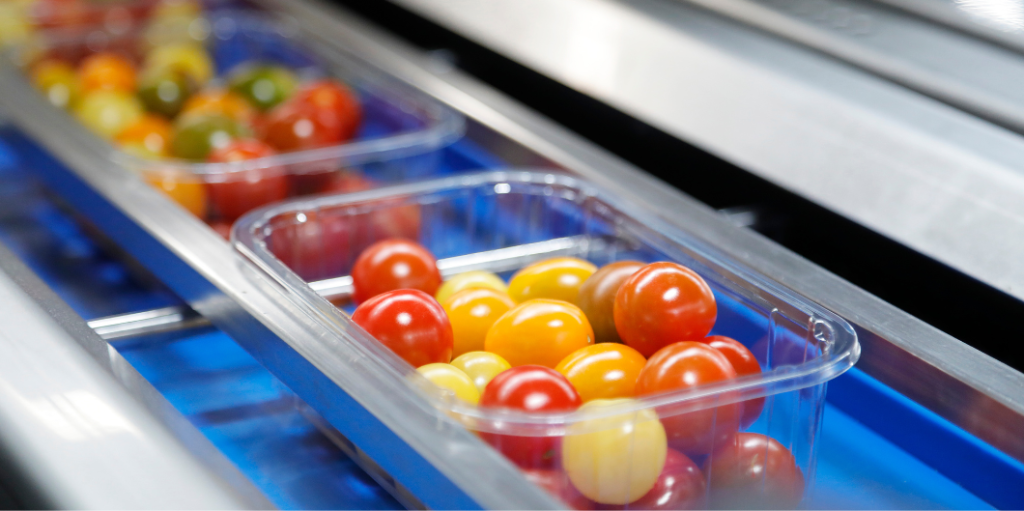
FDA-Compliant Plastics for Food Processing
FDA-compliant materials are specifically designed to withstand harsh chemicals, allowing them to be cleaned and sanitized regularly. Food grade plastics must also have low coefficients of friction and low water absorption rates.
Here are the most common types of FDA-compliant plastics used in the food and drink processing industry today:
-
High-Density Polyethylene (HDPE)
HDPE is a versatile product that offers low moisture absorption, superior impact resistance, high tensile strength, and excellent chemical and corrosion resistance. HDPE will not decay, splinter, or hold onto dangerous microorganisms. It is also highly resistant to chemicals used in cleaning agents and can be recycled.
-
Polycarbonate
Polycarbonate is a transparent plastic material with exceptional impact resistance, toughness, low moisture absorption, dielectric properties, and flame retardance. Polycarbonate is 30 times stronger than acrylic and over 200 times stronger than glass. It is lightweight, weighing six times less than glass. Polycarbonate is known as a great insulator.
-
Polytetrafluoroethylene (PTFE)
PTFE features a low coefficient of friction, excellent electrical properties, and high chemical resistance. It is also very stable within a wide range of temperatures. Because of these traits, it works well for a variety of industrial, electrical, and mechanical applications.
-
Extruded Nylon
Extruded nylon has remarkable tensile strength, wear resistance, and toughness. It has a low coefficient of friction, is lightweight, and is thermally and chemically resistant. Extruded nylon also meets the requirements for FDA, USDA, NSF, and 3-A Dairy compliance.
-
Acetal
Acetal is exceptionally stiff, strong, long-lasting, lubricious, and moisture-resistant. It offers a slimmer, lighter, and more flexible design compared to conventional industrial products. It also has a wide range of temperature performance levels and outstanding product fusion.
-
Ultra-High Molecular Weight Polyethylene (UHMW-PE)
UHMW is incredibly resilient, economical, and adaptable. It is well recognized for having a very low coefficient of friction, natural lubricity, high impact strength, and being chemically resistant. Due to an extraordinarily high molecular weight, UHMW is exceptionally resistant to abrasion and moisture absorption. It also complies with both FDA and USDA regulations.
Common Food Processing Applications
| HDPE | Polycarbonate | PTFE | Extruded Nylon | Acetal | UHMW |
|---|---|---|---|---|---|
| Cutting boards, bottling lines, cabinets, conveyors, and wear strips for material handling | Machine guards, windshields, heavy equipment glazing, and conveyor systems | Conveyor systems, bearings and bushings, seals and gaskets, valve seats, and thrust washers | Valve seats, seals and gaskets, thrust washers, and bearings and bushings | Can mandrels, chutes, hopper and silo liners, bearings and bushings, seals and gaskets, star wheels, thrust washers, and valve seats | Conveyor systems, bottling lines, food cabinets, star wheels, thrust washers, valves and fittings, and material handling wear strips |
Why Order Food Processing Materials From Piedmont Plastics?
Piedmont Plastics offers a wide range of performance plastic materials for industrial, manufacturing, and processing applications. Contact us to speak with a plastics expert or to learn more about our various materials solutions for your manufacturing projects!
Learn More
Get in touch with your local sales team to find out more about how Piedmont Plastics can assist with your project!
Contact Us